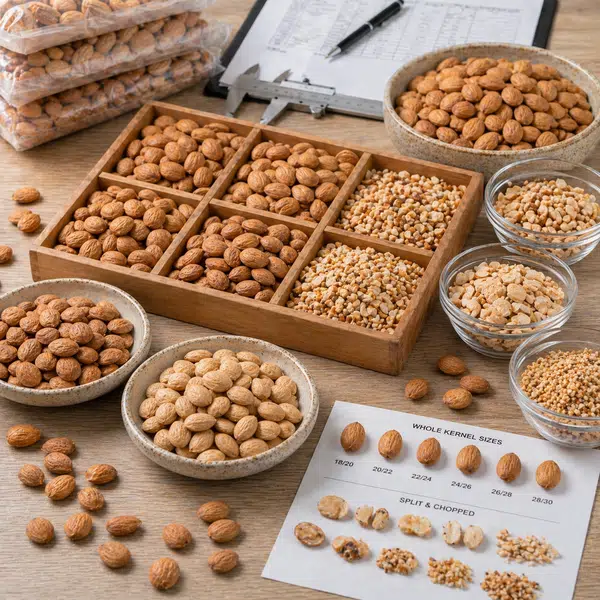
Apricot kernels can sit in several value chains at once, from premium retail and private label to industrial bakery, confectionery, snack mixes and ingredient processing. Because of that, buyers usually need a much clearer conversation than simply asking for a price per kilogram. They need to define the kernel type, end use, target market, acceptable appearance, size style, pack format and shipment rhythm before the right commercial offer can be structured properly.
When discussing grades, sizes and quality parameters, the first question is application fit. A retail buyer may care strongly about whole-kernel appearance, visual uniformity and consumer-facing presentation. An industrial buyer may care more about breakage tolerance, process consistency, cut behavior, blending performance or suitability for grinding. A confectionery or bakery manufacturer may need one specification for visible topping use and a very different specification for fillings or chopped inclusion use. This is why apricot kernel quality should be described in functional commercial terms rather than vague phrases alone.
Commercially, strong apricot kernel programs are built around precise specification discipline. Crop conditions, carryover planning, selection level, container planning, packaging materials, destination requirements and documentation all influence how a “grade” is actually understood by buyer and supplier. A supplier conversation becomes much smoother when buyers share annual demand estimates, application, required size profile, acceptable breakage, intended sales channel and whether the requirement is conventional or organic.
This article helps importers, processors, distributors and brand teams compare apricot kernel grades more clearly. It shows how size, visual quality and defect tolerances usually affect the suitability of the product for retail, food manufacturing and ingredient use before a program begins.