Apricot Kernels

Apricot Kernels: Industrial Applications in Breakfast & Snack Mixes

A practical buyer and exporter guide covering how apricot kernels are selected, processed and commercially supplied for breakfast cereals, granola systems and snack mix manufacturing.

Application focusBreakfast and snack mixes
Trade focusIndustrial ingredient fit
Buyer focusBlend performance
Apricot Kernels: Industrial Applications in Breakfast & Snack Mixes

Why this topic matters

Breakfast and snack mix manufacturers evaluate apricot kernels primarily as a blend ingredient. That means the real buying question is not just appearance, but how the kernels behave in mixing, packing and finished-product presentation.

Apricot kernels can sit in several value chains at once, from premium retail and ingredient use to industrial food manufacturing. In breakfast and snack mixes, they are chosen because they can contribute crunch, visual differentiation, perceived premium value and a distinct kernel identity when the application is structured correctly. For that reason, buyers usually need a more precise conversation than simply asking for a price per kilogram. They need to define the kernel type, end use, target market, acceptable appearance, cut or whole form, pack style and shipment rhythm before the right commercial offer can be structured.

When discussing industrial applications in breakfast and snack mixes, the first question is application fit. A manufacturer producing granola, muesli, cereal blends, premium trail mixes, fruit-and-nut combinations or portioned snack packs may care about very different factors than a confectionery buyer or a retail raw-ingredient buyer. Blend visibility, kernel integrity, breakage behavior, distribution during mixing, compatibility with dried fruit components and repeated pack performance often matter more than a generic idea of “premium quality.”

Commercially, successful apricot kernel programs for this category are built around specification discipline and process logic. Crop timing, kernel type, grade, cut format, packing options, target inclusion rate, packaging efficiency and documentation needs all affect final competitiveness. A supplier conversation becomes much smoother when buyers share annual demand estimates, intended application, required piece size, target positioning, pack format and whether the requirement is conventional or organic.

This article helps breakfast and snack mix buyers compare ingredient uses, technical expectations, processing forms and commercial planning factors before starting a program. That makes it easier to evaluate apricot kernels as a practical industrial component rather than as a loosely defined specialty ingredient.
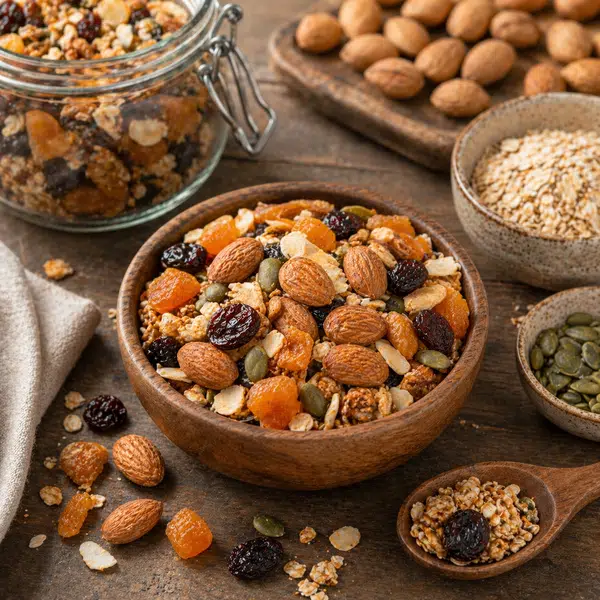
Where apricot kernels are used in breakfast and snack mixes

The exact use case determines whether the kernel should function as a visible premium inclusion, a crunchy component or a supporting ingredient inside a broader blend.

Granola and baked cereal blends

Apricot kernels can be used where the manufacturer wants an alternative kernel or nut-style component with visible identity and a dry, crunchy contribution. In these systems, size consistency and behavior during further handling are important.

Muesli and breakfast mixes

In muesli-style applications, kernels may be included alongside oats, flakes, dried fruits, seeds and other inclusions. Buyers often focus on distribution balance, visual harmony and whether the kernel fits the overall mix profile without dominating it.

Trail and snack mixes

Snack mix manufacturers may use apricot kernels for texture contrast, premium positioning and variety within mixed packs. Here, whole or larger piece presentation can matter more because the consumer sees the ingredient directly.

Portioned healthy snack concepts

Single-serve or portion-controlled snack packs may require tighter control over piece size, weight consistency and visual uniformity because ingredient balance affects both consumer appeal and fill accuracy.

Fruit-and-kernel combinations

Apricot kernels may be paired with raisins, dried apricots, mulberries, cherries or similar inclusions. In these cases, the buyer often evaluates how the kernels complement softer components in terms of texture, color and pack presentation.

Specialty premium blends

Some manufacturers use apricot kernels as part of a higher-positioned mix concept where differentiation matters. In such programs, visible identity and story value can carry more commercial weight than in purely functional industrial blends.

Main technical factors buyers usually review

Industrial blend users normally evaluate apricot kernels by how well they move through the line and how well they present in the final pack.

Kernel type and application logic

The buyer should define whether the formulation calls for sweet apricot kernels, bitter apricot kernels or a very specific ingredient concept. This decision should be explicit before quotation.

Whole versus cut format

Some mix applications need whole kernels for visible identity, while others may work better with split or chopped forms for more even distribution and easier portion control.

Size uniformity

More consistent size helps support better blending, more predictable weight contribution and a cleaner finished-pack appearance, especially in retail-visible mixes.

Breakage level

Excessive broken material can reduce perceived quality, change visual balance and create inconsistency across packs. Buyers should define what breakage level remains acceptable for their actual application.

Surface condition and cleanliness

In visible-mix applications, the kernels should be commercially clean and consistent enough to support the intended pack appearance and avoid distracting variation.

Mix compatibility

The kernel should fit practically with the other ingredients in the system. Size, density, appearance and handling behavior all influence how harmonious the final blend looks and performs.

Why blend behavior matters more than isolated appearance

An apricot kernel that looks acceptable on its own may still be unsuitable if it does not blend or present well in the finished system.

Distribution in the mix: A breakfast or snack mix should look balanced across packs. If the kernel size is too uneven or the breakage level is too high, the ingredient may distribute inconsistently and weaken visual uniformity.

Compatibility with softer components: When apricot kernels are blended with dried fruits, clusters or softer ingredients, the manufacturer often reviews whether the mix remains commercially attractive and whether the kernels stay appropriately visible without overwhelming the blend.

Filling and weight control: Ingredient form affects how well the product moves through packing equipment and how predictable the composition is from pack to pack. This is especially important for retail units and portion-controlled formats.

Consumer-facing appearance: In snack mixes and breakfast products sold in transparent packs or window pouches, the ingredient’s visual behavior inside the total mix matters as much as its individual quality. Buyers therefore assess the kernel as part of a finished visual system.

Line practicality: If the kernel contributes too much fines, too many broken pieces or uneven distribution, the manufacturer may face packing inefficiency or a higher rate of pack-to-pack inconsistency. That is why fit-for-use industrial grading is so important.

How application changes the preferred specification

The same kernel may be appropriate for one mix concept and commercially weak for another. Specification should follow the product architecture.

Premium snack mix applications

These usually favor stronger visual quality, more intact kernels, better size consistency and a cleaner, more retail-friendly presentation because the ingredient remains highly visible to the consumer.

Breakfast cereal and muesli applications

These may tolerate a more commercially practical grade if the kernels still distribute well, contribute the desired texture and remain visually compatible with the rest of the blend.

Granola and baked mix systems

Where the kernels are combined into baked clusters or structured cereal systems, the manufacturer may care more about process handling and piece behavior than about raw whole-kernel appearance alone.

Industrial blend bases

For larger-volume functional mixes, the buyer may prioritize stable supply, workable piece size and cost-effective industrial fit over a visually premium ingredient standard that adds little practical value.

Processing forms commonly discussed with mix manufacturers

Different factories prefer different delivery formats depending on their own blending equipment and finished-product architecture.

Whole kernels

Useful where the buyer wants a visible premium inclusion or stronger identity in the final pack. Whole-kernel programs usually require tighter discussion around size, integrity and breakage tolerance.

Split or halved kernels

These may be preferred when the manufacturer wants visible inclusion value but also improved blending balance, more controlled portioning or a different textural effect in the finished mix.

Chopped formats

Chopped kernels can support more even distribution in cereals, bars, granola or compact mixes. In such cases, cut consistency becomes part of the product brief.

Industrial practical grades

Some customers do not need a visually premium whole-kernel offer. They need a format that works reliably inside a blend at the right commercial cost. This should be discussed openly at the quotation stage.

Commercial factors that matter in breakfast and snack mix supply

Industrial mix users usually judge value by pack performance, visual consistency and repeatability across the season.

Fit-for-use grading

The correct grade depends on the actual mix concept. Overbuying premium whole kernels for a chopped cereal base can weaken cost efficiency, while under-specifying a visible snack mix ingredient can damage final presentation.

Forecast-based continuity

Manufacturers with recurring production normally benefit from sharing annual volume and shipment rhythm so the supplier can plan availability and packing more effectively.

Private label sensitivity

If the final breakfast or snack mix is private label, ingredient consistency becomes even more important because the finished pack must meet brand and retailer expectations repeatedly.

Packing practicality

Industrial buyers often prefer export packs that protect the kernels during transit while remaining efficient for plant receipt, storage and line-side use.

Typical risk points in breakfast and snack mix applications

Most industrial issues can be reduced when the ingredient is specified according to the real mix system rather than through general quality language.

Kernel type left ambiguous

The supplier cannot prepare the right offer unless the buyer clearly identifies the intended type and ingredient concept from the start.

Whole-kernel spec used where cut form is more suitable

Some buyers pay for an unnecessarily premium whole-kernel grade even though a split or chopped format would perform better in the actual mix.

Blend testing skipped

A good sample should still be tested in the real recipe and packing system because isolated visual approval does not guarantee good industrial performance.

Breakage tolerance not written clearly

If acceptable breakage, fines or size variation are not documented, the buyer and supplier may interpret the same shipment differently.

Visual mix effect underestimated

In transparent or premium packs, the ingredient’s impact on overall blend appearance can matter almost as much as the technical specification itself.

Spot buying used for recurring packed products

Manufacturers with ongoing mix production usually face fewer surprises when they plan supply rather than relying only on short-notice purchases.

What industrial buyers should define before requesting a quotation

A more detailed brief allows the supplier to recommend the right ingredient format and a more realistic commercial structure.

Application brief

State whether the kernels are intended for granola, muesli, breakfast cereals, trail mixes, premium snack blends or portion packs.

Kernel brief

Confirm sweet or bitter type, organic or conventional status and whether the product should be whole, split or chopped.

Blend brief

Explain whether the main requirement is visual inclusion, crunch, balanced distribution, consumer-facing premium appearance or practical industrial functionality.

Quality brief

Share acceptable limits for breakage, visual defects, size distribution and any mix-specific appearance expectations.

Supply brief

Provide trial quantity, recurring shipment schedule or annual estimate so the supplier can advise on continuity and crop planning.

Packing brief

Indicate export pack size, liner style, pallet requirements and whether the goods will move directly into mixing operations or interim storage.

Key takeaways

These points make the article immediately useful for breakfast cereal, granola and snack mix manufacturers.

Blend performance is central

Apricot kernels should be judged by how they distribute, present and behave in the final mix, not only by standalone visual quality.

Application defines the best format

Whole kernels suit some visible premium blends, while split or chopped formats may be more effective in balanced cereal and snack systems.

Kernel type must be clarified early

Sweet and bitter kernels should never be left undefined in an industrial mix inquiry because their commercial and application logic can differ materially.

Visual harmony matters in finished packs

The ingredient should support the intended appearance of the full breakfast or snack mix, especially in transparent or private label retail formats.

Forecast-based buying improves continuity

Repeated mix production usually benefits from planned supply rather than relying only on short-term spot coverage.

Packing should support factory handling

The best export format protects the kernels in transit while remaining practical for receiving, storage and line-side issue at the customer plant.

Commercial discussion checklist

A structured checklist helps buyers and suppliers move from a general mix application inquiry to a workable industrial supply proposal.

Product brief

Confirm kernel type, intended breakfast or snack mix application, organic or conventional status and target market.

Format brief

State whether whole, split or chopped kernels are required and whether visibility or distribution is the main formulation priority.

Grade brief

Share size expectations, acceptable breakage, visual quality requirements and any important blend-related tolerances.

Packing brief

Define export carton or bag format, inner liner expectations, pallet logic and any plant receiving constraints.

Program brief

Clarify whether the request is for trials, a pilot run, recurring monthly supply or a broader annual manufacturing program.

Documentation brief

List any required certification, declarations, analytical support or customer-specific technical files needed for approval.

Mini FAQ

Short answers on apricot kernel use in breakfast and snack mix manufacturing.

What should buyers clarify first for apricot kernels?

Buyers should first clarify kernel type, application in breakfast or snack mixes, target market, grade, certification profile, required cut or whole format and preferred pack format.

Why create a separate article for industrial applications in breakfast & snack mixes?

Because breakfast and snack mix manufacturers assess apricot kernels based on ingredient performance, blending behavior, visual compatibility, pack flow, breakage control and repeated industrial supply consistency.

Can this topic support both organic and conventional programs?

In many cases yes, provided the kernel type, certification profile, processing form and supply structure are aligned with the customer requirement and the available sourcing program.

Are whole kernels always the best choice for snack and breakfast mixes?

Not always. Some applications need whole kernels for visual identity, while others work better with split, chopped or more industrially practical forms depending on mixing behavior, pack weight targets and finished-product positioning.

Why does blend behavior matter so much?

Because ingredient size, breakage pattern, density, surface condition and distribution behavior affect how evenly the kernels mix, how they appear in the final pack and how reliably the line performs at scale.

Should industrial buyers approve the ingredient only from a visual sample?

Not usually. Visual review is helpful, but real blend and packing trials usually provide a much better basis for approval because they show how the kernels behave inside the actual product system.

Quick Contact