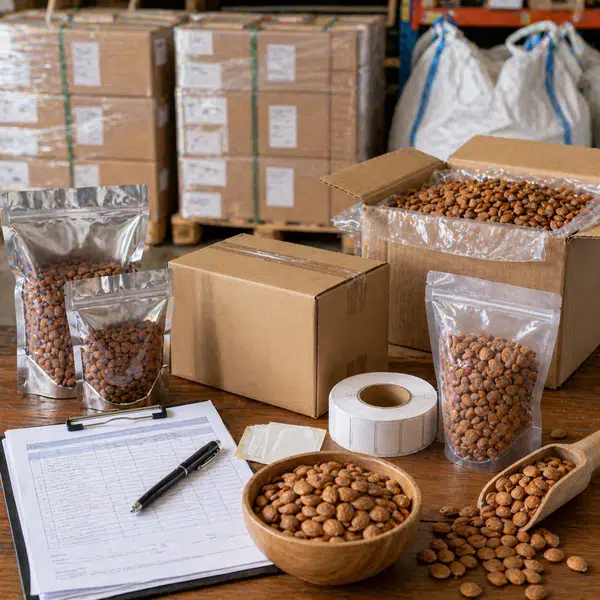
Apricot kernels serve several value chains at once, including ingredient supply, confectionery, bakery, snack applications, specialty retail and industrial processing. For that reason, buyers usually need a clearer conversation than simply asking for a price per kilogram. They need to define the end use, kernel type, format, target market, acceptable appearance, pack style and shipment rhythm before the right commercial offer can be structured.
When discussing private label and bulk export considerations, the first question is program fit. Private label buyers usually care about consumer-facing pack presentation, label wording, barcode layout, shelf positioning, product claims and consistency across repeated runs. Bulk buyers usually care more about grade, lot consistency, freight efficiency, pack durability, traceability and whether the kernels will be processed further, repacked locally or used as an ingredient.
Commercially, successful apricot kernel programs are built around specification discipline and channel logic. Crop timing, kernel type, grading, container planning, packaging materials, labeling scope, documentation requirements and destination expectations all affect final competitiveness. A supplier discussion becomes much smoother when buyers share annual demand estimates, intended channel, required pack format and whether the program is conventional or organic, sweet or bitter, retail-ready or bulk.
This is why a dedicated article on private label and bulk export considerations is useful. It helps importers, distributors, brand owners and processors compare commercial models more clearly before starting a program. It also helps them understand why two offers for the same product family can differ significantly depending on the service level, packaging logic and downstream market requirements.