Fruit character
Their darker color and richer appearance can help create a more premium or artisanal bakery look, especially in visible-fruit breads and pastries.
A practical B2B guide for bakery manufacturers, ingredient buyers, private label teams and industrial users evaluating black raisins as a functional fruit inclusion. This article focuses on technical fit, dough behavior, processing performance, bakery formats, packing logic and commercial sourcing points that matter in real production.
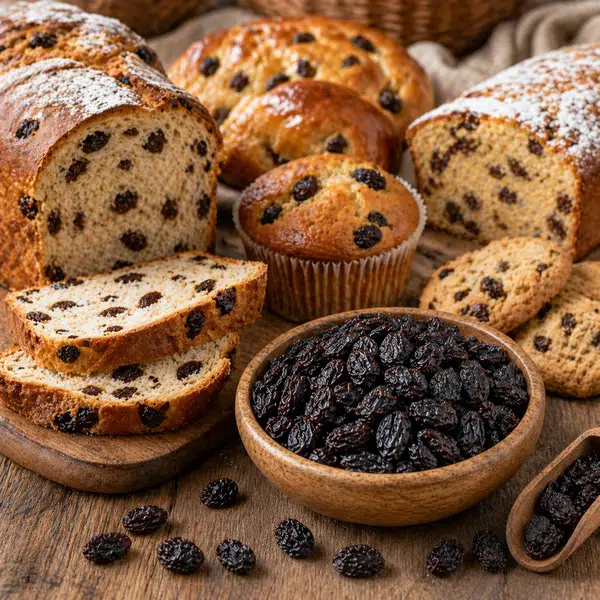
Bakery use is not only about fruit inclusion. It is about how the fruit behaves in dough, batter, baking heat, storage and final consumer presentation.
Black raisins can serve several value chains at once, from retail snack products to confectionery and industrial ingredients, but bakery is one of the most technically sensitive routes because the fruit must remain commercially and functionally effective throughout mixing, fermentation, proofing, baking, cooling, packing and shelf life. A raisin that looks acceptable in a bulk carton may still perform poorly in dough or lose value in the final baked product if the profile is not matched to the application.
Their darker color and stronger fruit identity can make black raisins attractive in premium breads, buns, fruit loaves, sweet bakery products, pastries, breakfast bakery items, cookies and seasonal products where visual contrast matters. In many of these formats, black raisins are used not only for sweetness but also for bite, fruit distribution, artisan-style appearance and a more premium consumer perception compared with standard lighter raisins.
When discussing black raisins for industrial applications in bakery, the first question is application fit. Bread manufacturers may focus on dough tolerance, moisture balance and even fruit distribution. Cake or muffin producers may care more about suspension in batter, visual appearance after baking and softness in the final bite. Pastry users may place more value on berry integrity, reduced leakage, premium look and compatibility with fillings or laminated systems.
Commercially, successful bakery programs are usually built around specification discipline, process stability and continuity of supply. Crop conditions, moisture profile, grade mix, cut resistance, packaging route, destination requirements and documentation all affect the final competitiveness of the ingredient. A supplier conversation becomes much more effective when buyers describe the exact bakery category, expected annual demand, pack format, production system and whether the project is conventional, organic or label-sensitive.
Black raisins bring more than sweetness to bakery systems. They add fruit identity, chew, visual contrast and product character.
Their darker color and richer appearance can help create a more premium or artisanal bakery look, especially in visible-fruit breads and pastries.
Black raisins add chewiness and soft fruit bite, which can improve sensory balance in bread, buns, cakes and cookies.
They can contribute fruit-led sweetness and reduce the need for more artificial sensory positioning in bakery concepts that want a cleaner ingredient story.
Bakery products are often sold visually as much as technically. Black raisins can improve perceived value when the fruit remains clearly visible after baking and supports a premium fruit inclusion narrative. This makes them useful not only in specialty bakery but also in broader industrial formats that want stronger shelf appeal without moving away from familiar fruit ingredients.
Different bakery categories create different technical demands on the ingredient, so one black raisin profile does not fit every use case equally well.
In bread systems, black raisins are often used in fruit breads, sweet loaves, breakfast breads and enriched doughs. Here, dough tolerance, fruit distribution and retained appearance after baking are especially important.
In buns and sweet rolls, the fruit must integrate well into softer doughs without excessive breakage or localized clumping, while still contributing visible fruit content in the finished product.
In cake-style applications, suspension behavior, moisture compatibility and visual presentation after baking are often more important than dough strength or fermentation tolerance.
In cookies, pastries and premium baked goods, black raisins can be used for visible inclusion, contrast against dough color and a more premium fruit perception, especially in fruit-and-spice or festive profiles.
A raisin that performs well in a fruit loaf may not behave the same way in a laminated pastry or a cookie dough system. Some bakery applications are more forgiving, while others require tighter control over berry size, moisture and appearance. That is why end-use definition should come before price comparison.
Bakery use is process-sensitive. Ingredient performance matters during production as much as in the finished product.
In bakery, small differences in ingredient behavior can change the whole production result. Fruit that is too dry may feel hard or scorch visually. Fruit that is too moist may affect dough handling, create local softness issues or reduce stable distribution. Wide size variation can distort piece appearance and make finished goods look less uniform.
Moisture is one of the most important bakery variables. Fruit that is too dry may create hard bite or poor sensory integration in the final product. Fruit that is too moist may increase stickiness during handling, reduce distribution quality or interact negatively with surrounding dough structure. Buyers usually benefit from discussing moisture in relation to the exact bakery system rather than treating it as a generic dried fruit number.
Bakery manufacturers often judge black raisins by how well they survive and contribute through the line, not just by raw product appearance.
Fruit must integrate into dough or batter without excessive damage, smearing or local concentration that disrupts production consistency.
The ingredient should remain visually acceptable and sensorially balanced after thermal processing, with manageable shrinkage, darkening or surface drying.
After baking, the fruit should still support the target texture, shelf appeal and consumer eating experience rather than feeling tough, wet or poorly distributed.
A general dried fruit offer may not be enough for industrial bakery. Buyers often need to translate ingredient expectations into process language: how the fruit behaves during mixing, how visible it remains after baking, whether it supports soft bite, and how it interacts with the finished product’s shelf-life and appearance goals.
Bakery users often need a more functional quality profile than general bulk traders because the ingredient must work in a specific production environment.
These usually focus on grade, moisture, basic cleanliness, shipment readiness and broad commercial suitability for import, repack or wholesale sale.
These often add stronger requirements around dough compatibility, berry integrity after mixing, manageable softness, bake appearance, distribution quality and final bite performance.
Two black raisin offers may both be valid on paper, but one may be more suitable for industrial bakery while the other is better suited to repack, snack use or general foodservice distribution. Buyers that define bakery performance criteria early usually avoid misaligned offers and downstream complaints.
The right packing route depends on whether the buyer is manufacturing industrially, repacking locally or launching a retail-ready bakery concept.
Industrial bakeries usually prefer bulk export or ingredient-style cartons that support efficient warehouse handling, controlled line feeding and recurring production use.
When black raisins are part of a finished consumer bakery concept, the discussion may include retail pouching, co-packing, branded formats or private label retail packs depending on the project scope.
Industrial bakeries usually need product packed for process efficiency rather than for consumer shelf presentation. Retail-facing concepts need the opposite. Clarifying the route early helps keep the offer commercially relevant and avoids unnecessary packaging cost.
In bakery, the best ingredient is not just the cheapest acceptable one. It is the one that fits the process, the product concept and the cost structure at the same time.
Bakeries usually need repeatability across multiple runs. A slightly cheaper lot may be commercially weaker if it introduces process inconsistency or finished product variation.
Better sorting and more stable berry profile can reduce rework, visual inconsistency and customer complaints in finished bakery products.
In visible-fruit bakery products, black raisins can help create a stronger premium impression when the fruit remains attractive after baking and is distributed well.
Industrial bakery users generally benefit from recurring or annual supply structures rather than purely reactive spot buying. This improves continuity, supports product consistency and creates a better basis for aligning technical expectations with commercial execution over time.
These points make the article immediately useful for importers, processors and brand teams.
Key decision point: define the exact bakery application before selecting grade, moisture target and packing route.
Common buyer need: align berry size, dough compatibility, bake stability and final appearance before benchmarking price.
Supply planning note: product suited to premium visible-fruit bakery applications may require tighter control than product intended for broad industrial dough use.
Commercial tip: recurring bakery programs usually perform better when they are built around stable functionality and process consistency, not only lowest spot price.
A short checklist helps buyers and sellers move faster toward a practical quotation and better bakery fit.
Confirm bakery application, desired berry profile, moisture direction, visual expectations and whether the fruit will be used in bread, cakes, pastries, cookies or sweet dough systems.
Share whether the requirement is industrial bulk, ingredient handling, local repacking or a private label retail-facing bakery ingredient concept.
State whether the inquiry is for trials, pilot runs, recurring production demand or a broader annual bakery supply program.
A strong first message usually includes the intended bakery format, annual or trial volume, preferred berry profile, pack route, destination market and any important quality or certification points. This makes it much easier to determine which black raisin profile is genuinely suitable for the production system.
Short answers on every article help buyers review the topic quickly.
End use, bakery format, desired grade, moisture profile, required certification status and preferred pack format should be clarified first.
Because bakery use requires more precise decisions on dough compatibility, moisture behavior, berry integrity, bake appearance, processing stability and final product performance than general dried fruit trade discussions.
In many cases yes, provided the fruit, certification profile, technical expectations and available sourcing program are aligned with the buyer requirement.
Typical applications include fruit breads, sweet loaves, buns, rolls, cakes, muffins, cookies, pastries, festive bakery products and breakfast bakery items with visible fruit content.