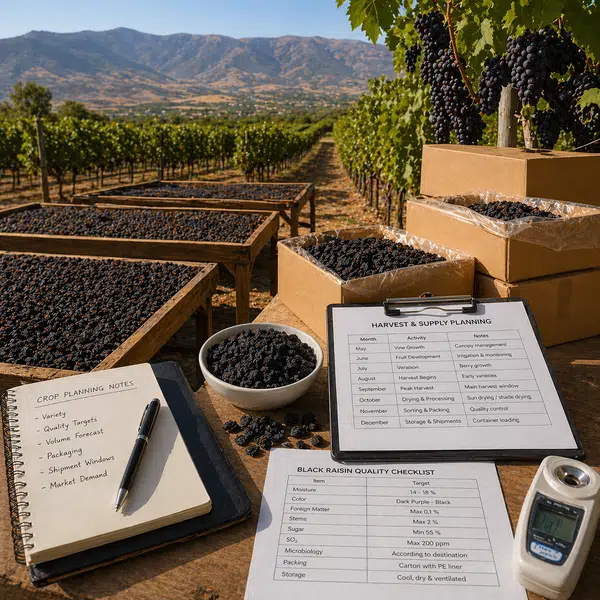
Black raisins can sit in several value chains at once, from premium retail and repacking programs to bakery, cereal, snack and ingredient applications. Because they are often used as a differentiated alternative to standard sultanas, buyers usually need a clearer sourcing conversation than simply asking for a price per kilogram. They need to define the end use, desired appearance, color depth, moisture profile, pack style, destination market and shipment rhythm before the right commercial structure can be built.
Seasonality matters because black raisins are not only a processed fruit product but also a crop-dependent agricultural item. Harvest timing affects incoming raw material quality, drying results, sizing consistency, visual character and how early export programs can be confirmed. Buyers that understand this timing usually make better sourcing decisions, especially when their requirement is grade-specific, retail-facing or tied to repeat deliveries over a long selling season.
When discussing black raisins for seasonality, harvest windows and crop planning, the first question is usually not “what is today’s price?” but “what kind of program are we trying to build?” A bakery user may care most about stable moisture, manageable texture and reliable industrial continuity. A repacker may focus more on visual uniformity, stem control, sorting level and pack economics. A private label buyer may add artwork deadlines, launch timing and fixed delivery windows. Each of these changes how crop planning should be discussed.
Commercially, successful black raisin programs are usually built around timing discipline, stock planning and realistic specification management. Crop windows, carryover stock, packing availability, packaging materials, freight schedules, pallet planning and market timing all influence final competitiveness. A supplier conversation becomes much smoother when the buyer shares annual demand estimates, target season, pack format and whether the requirement is conventional, natural or organic-linked.