New-crop availability
Once the new crop begins to move into commercial channels, buyers often shift their focus from remaining carryover opportunities to fresh season planning, sample evaluation and forward shipment scheduling.
A practical sourcing and trade guide for importers, distributors, repackers and food manufacturers planning dried fig programs around harvest timing, new-crop availability, industrial formats and annual supply continuity.
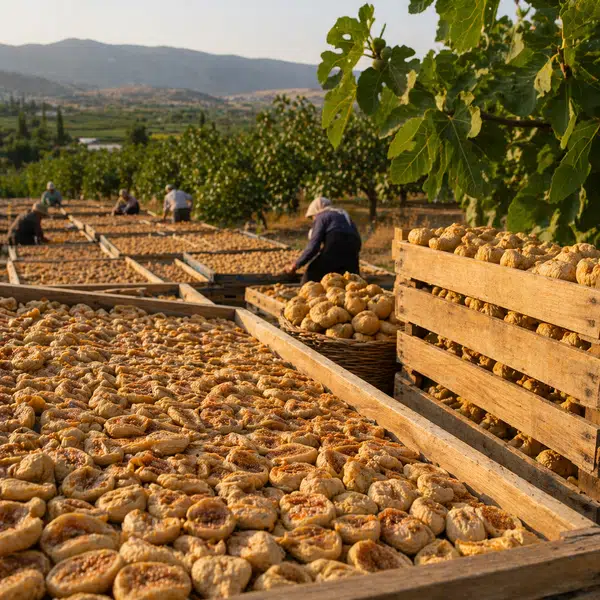
Dried fig sourcing becomes much more predictable when buyers understand how seasonality shapes quality, availability and commercial timing.
Dried figs are not only a product category. They are a crop-driven supply program strongly influenced by harvest timing, processing windows, pack preparation and the balance between new-crop availability and carryover stock. Turkish dried figs are closely associated with Aydin and with both retail and industrial formats such as Lerida, Garland, Protoben, pulled figs, diced figs and fig paste. Because of that, a serious buying conversation usually requires more than a simple price request.
Buyers often focus on format, grade and destination market, but timing can be just as important. The point at which an inquiry is made within the crop cycle can affect quotation structure, product selection, shipment timing, packaging lead times and even which formats are most practical to offer. A buyer looking for premium retail packed figs, for example, may need a different planning rhythm from a buyer sourcing diced or paste formats for industrial use.
Seasonality also affects internal planning. Importers, distributors and processors usually need to coordinate sales forecasts, warehouse space, packaging materials, approval cycles and shipment windows around the crop. Buyers who plan too late may face narrower format choice, more difficult timing or less flexible program design. Buyers who plan early usually gain a clearer basis for quotation, better continuity and a more stable annual structure.
This is why crop planning deserves its own discussion. Understanding the harvest window, new-crop transition and likely shipment rhythm helps buyers move from reactive spot buying toward a better structured dried fig program.
Seasonality influences more than availability. It shapes format planning, commercial timing and the overall structure of the supply program.
Once the new crop begins to move into commercial channels, buyers often shift their focus from remaining carryover opportunities to fresh season planning, sample evaluation and forward shipment scheduling.
Dried figs do not move from harvest directly into every final format at the same moment. Retail packs, industrial cuts and paste programs may follow different operational timelines.
Whole consumer formats, industrial fig pieces and paste programs may each have different planning priorities. The right inquiry timing helps the supplier align the suitable format with the buyer's channel.
Buyers who align their forecasts with the crop cycle usually build smoother annual programs than those relying only on late-stage spot requests.
Harvest timing matters because it influences when buyers can begin serious new-crop planning, sampling and pack preparation.
For dried figs, harvest and early post-harvest handling create the foundation for the commercial season. Buyers do not necessarily need to track field activity in detail, but they do need to understand that new-crop readiness develops in stages. The earliest timing may support initial market discussions and planning, while broader program execution depends on sorting, selection, processing and commercial packing becoming operationally ready.
That is why the term new crop should be used carefully in trade discussions. A buyer asking for new-crop dried figs may need to clarify whether they are discussing early commercial visibility, actual shipment timing or finished retail or industrial formats ready for loading. These are related, but they are not always identical steps in the supply chain.
For Atlas, the practical point is that buyers who begin their planning around the harvest window can structure a more realistic program. They can align sample requests, format decisions, label preparation, packing plans and forward shipment timing with the actual season rather than treating the crop like an always-available warehouse commodity.
Different dried fig formats often require different planning rhythms because they move through different selection and processing routes.
These typically require stronger attention to appearance, size direction, presentation quality and packing preparation, so program timing should reflect both crop availability and pack readiness.
Where the market depends on traditional presentation or visible premium positioning, crop timing and selection standards become commercially important early in the season.
These may suit buyers who want a simpler presentation style, but they still benefit from crop-cycle planning and clear specification timing.
Industrial diced programs depend more on processing fit, consistency and application planning than on premium shelf presentation, yet they still need timely forecasting and pack preparation.
Paste programs are often linked to industrial demand cycles and production planning. Buyers usually need to align volume forecasts and technical timing well before urgent replenishment becomes necessary.
Some customers source both retail and industrial dried fig formats in parallel. In such cases, crop planning should distinguish clearly between each format route rather than treating the whole program as one undifferentiated inquiry.
The strongest dried fig programs are often shaped before the crop is fully commercial, not after the season is already underway.
Before the new crop begins moving into the market, buyers should define the core commercial structure of their program. This includes end use, expected annual volume, required formats, target quality direction, certification profile, pack structure and likely shipment rhythm. The more clearly those points are defined before new-crop execution begins, the more practical the supplier conversation becomes.
For retail and private label programs, this stage is also useful for label planning, artwork timing, barcode structure and outer carton logic. For industrial users, it is the time to define whether the need is for whole fruit, diced material or paste, and whether the program will run as a seasonal buy, rolling annual supply or call-off structure. These decisions shape how the crop should be approached commercially.
Buyers who wait until they need immediate shipment often reduce their own flexibility. They may still find supply, but the range of practical options may be narrower than it would have been with earlier planning. That is one of the main reasons why crop planning matters commercially.
Many programs do not move from one crop to the next in a single clean step. The transition period should be managed deliberately.
For recurring dried fig buyers, the transition from one crop cycle to the next is a practical commercial issue. The question is not only when the new crop becomes available, but also how the buyer manages inventory, customer commitments and specification continuity during the changeover. This can be especially important for importers and repackers who are serving year-round channels.
Carryover planning matters because some buyers may need to bridge the period before new-crop supply is fully ready in the required format. Others may prefer to shift quickly into the new season for quality, market positioning or commercial reasons. The best approach depends on the application, the channel and how sensitive the customer is to seasonal variation in appearance or format profile.
Atlas therefore treats new-crop transition as part of program design, not as a last-minute shipping issue. Buyers who define their transition strategy early usually experience fewer interruptions and more controlled commercial continuity.
Seasonality does not determine price by itself, but it strongly influences when quotations become most meaningful and comparable.
At this stage, buyers typically use market discussion to define the likely program structure, target format and commercial direction rather than only looking for a quick spot price.
Once the crop and the intended format are commercially workable, quotations usually become more useful because the discussion can be tied to a more concrete product and packing structure.
Buyers working late in the cycle may still secure supply, but they often need to evaluate the offer within the reality of format availability, stock condition and shipment timing.
The strongest pricing discussions usually happen when buyers approach the crop with forecast visibility rather than as a sequence of isolated urgent purchases.
Both program types can be planned effectively, but they should not be treated as identical commercial routes.
Organic dried fig programs often require earlier and more structured planning because certification continuity, product identity, label preparation and retail positioning may all be more sensitive to timing. Buyers serving organic retail or specialist channels usually benefit from early forecasting and a well-defined new-crop transition plan.
Conventional programs may offer greater flexibility in some channels, especially where the buyer is serving industrial, repacking or broader commercial distribution. Even in those cases, however, crop timing still affects quotation relevance, format planning and shipment continuity. A conventional program remains stronger when it is aligned with the season rather than built only around short-term buying needs.
Where buyers manage both organic and conventional lines, the best practice is to keep the two program structures clearly separated in forecasting, packing and documentation. That makes crop execution more manageable and helps preserve commercial clarity across the season.
Most dried fig supply problems start with timing assumptions that are too broad or too late.
Late planning can reduce flexibility on format choice, pack timing, labeling and shipment scheduling.
Whole premium formats, diced material and paste do not always move into commercial readiness on exactly the same timing logic.
Year-round buyers should decide early how they want to manage the transition between existing stock and new-crop supply.
Without format, channel, timing and pack clarity, price comparisons are often less useful than they appear.
Retail and private label programs especially need pack planning early enough to fit the commercial season properly.
These channels often depend on different formats and different timing priorities, so they should be structured separately.
A clear crop-planning brief helps Atlas prepare a quotation and supply discussion that are actually useful.
State whether the requirement is for Lerida, Garland, Protoben, diced figs, paste or another defined commercial format.
Confirm whether the program is for retail, private label, foodservice, repacking or industrial use.
Share the expected annual requirement, even if provisional, together with any seasonal peaks or scheduled promotions.
Clarify whether the discussion is for early planning, new-crop execution, carryover supply or a full annual call-off program.
Confirm whether the requirement is organic or conventional so the crop program can be aligned accordingly.
Share carton, consumer pack, industrial pack or private label expectations early, because packaging timing can affect seasonal execution.
These points help buyers turn dried fig seasonality into a planning advantage rather than a sourcing problem.
Harvest timing, processing readiness and pack preparation all influence how dried fig supply should be planned.
Lerida, Garland, diced and paste programs should not automatically be treated as if they move through the same commercial timeline.
Buyers who define volume, channel, format and pack needs before the season is fully underway usually build stronger programs.
A structured seasonal approach gives better continuity, clearer quotations and more practical shipment planning than reactive purchasing alone.
A short checklist helps buyers and suppliers move faster toward a realistic crop-cycle discussion.
Confirm the intended dried fig format, quality direction and whether the product is for retail display or further processing.
State whether the need is for new-crop planning, carryover management, immediate shipment or an annual supply framework.
Provide annual estimates, seasonal peaks and minimum shipment logic so the program can be structured realistically.
Share carton, consumer pack, pallet and labeling expectations as early as possible, especially for retail and private label formats.
Clarify whether the program is organic or conventional so the crop planning and document flow can be aligned correctly.
Indicate whether the inquiry is a trial, recurring order, seasonal campaign or annual program requiring forward planning.
Short answers help buyers review the seasonal planning topic quickly.
Buyers should first clarify end use, target market, desired format, grade direction, certification profile, preferred pack format and expected shipment rhythm.
Because dried fig programs depend heavily on harvest timing, new-crop transition, carryover planning, industrial format availability and how buyers structure their annual purchasing calendars.
Yes. Crop planning principles can support both organic and conventional dried fig programs when the product format, certification profile, pack structure and annual forecast are aligned with the customer requirement.
Seasonality affects availability, new-crop timing, format planning, quality profile, pricing logic, pack preparation and shipment continuity. Buyers who plan around the crop window usually build more stable programs.
Atlas supports buyers who want dried fig programs aligned with real harvest timing, format planning and commercial execution.
If your project involves dried figs for retail, private label, foodservice, industrial use or mixed-channel distribution, the most useful next step is to share the target format, expected volume, certification route, preferred pack structure and intended shipment timing. That allows Atlas to structure the conversation around realistic crop planning, appropriate format selection and a more commercially useful quotation path.
Whether the requirement is for new-crop discussions, carryover transition, industrial fig paste planning or a longer annual program, a clear seasonal brief usually leads to better alignment, stronger timing discipline and smoother supply continuity.