Short raw fruit window
Sour cherries are harvested within a relatively limited period, which means the main decisions on processing and stockbuilding are concentrated into a short operational season.
A practical trade and sourcing guide for buyers evaluating dried sour cherry seasonality, fresh fruit harvest timing, production windows, annual availability and the commercial decisions needed to plan supply correctly.
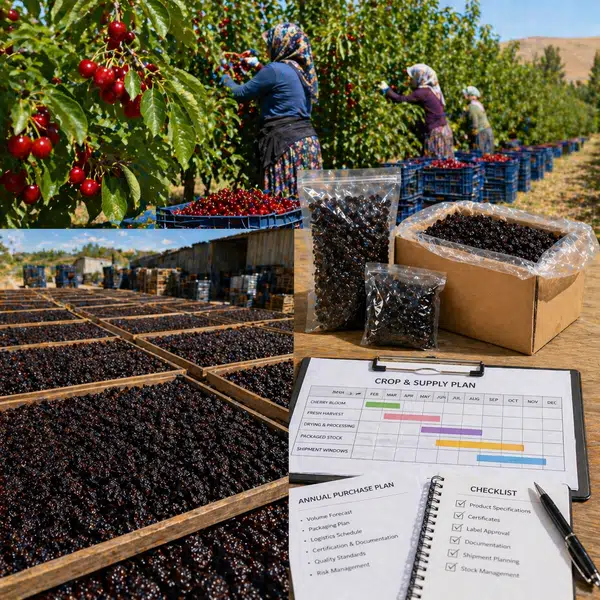
Dried sour cherries are highly commercial, but their supply logic begins with a short seasonal raw fruit window.
Dried sour cherries sit in several value chains at once, including premium retail, bakery, snack, ingredient, cereal, confectionery and food manufacturing channels. Their tart profile, deep color and distinctive flavor make them commercially attractive, but they are not a product that should be planned only through spot-price thinking. Buyers need to understand how seasonality, harvest timing and processing rhythm affect availability and program structure.
Unlike categories where raw material may be more broadly available across a longer period, dried sour cherries depend on a relatively concentrated fresh fruit harvest window. That means decisions around raw fruit intake, pitting, drying, sweetening profile where applicable, packing and stockholding are compressed into a limited seasonal production period. Buyers who come into the market too late may still secure supply, but often with less flexibility on price, pack timing, exact specification or promotional planning.
When discussing dried sour cherries in commercial terms, the first real question is not only grade or pack format. It is how the intended use fits the crop-year cycle. Bakery and ingredient users often need continuity across the full year, while retail and private label buyers may need earlier planning so launch timing, artwork, pack materials and inventory build align with the post-harvest supply window. Atlas presents these differences clearly so buyers can move from reactive purchasing to better seasonal planning.
Strong dried sour cherry programs are built around timing discipline. Crop conditions, fruit yield, sugar-acid balance, raw fruit availability, processing capacity, carryover stock, packaging schedules and shipment timing all affect final competitiveness. A sourcing conversation becomes much more efficient when buyers share expected annual demand, pack format, channel profile and whether the requirement is conventional or organic.
Seasonality in this category is not only about harvest dates. It affects cost structure, quality options, planning urgency and supply confidence.
Sour cherries are harvested within a relatively limited period, which means the main decisions on processing and stockbuilding are concentrated into a short operational season.
Because the product begins as a seasonal fruit, drying and packing decisions are closely linked to harvest flow, fruit condition and available processing capacity during that window.
Dried sour cherries are sold long after harvest, but that year-round availability depends on how successfully the crop is processed, packed, reserved and managed after the season.
Buyers who plan early generally have better room to discuss program structure, pack materials, documentation timing and seasonal commitments than buyers who enter only after stock is already allocated.
Buyers do not need orchard-level detail, but they do need to understand how the harvest window shapes supply behavior.
The harvest window for sour cherries is the commercial starting point for the entire dried product cycle. It determines when fresh fruit becomes available for processing, when the main raw material cost picture begins to form and when the first realistic view of crop volume and quality can be discussed. In practical trade terms, harvest is the moment when estimates begin turning into actual availability.
For buyers, the key takeaway is that dried sour cherry sourcing should not be treated as a permanently flat market. Early in the season, the conversation may focus on crop outlook, expected volume, quality expectations and program intentions. During and just after harvest, the focus often shifts toward real fruit intake, drying plans, packing schedules and reservation logic. Later in the year, the commercial conversation may be shaped more by available stock, pack material readiness, carryover position and freight timing.
This sequence matters because the same product may be quoted differently depending on when the inquiry reaches the market. A buyer seeking annual continuity, private label execution or industrial line stability should align planning with the harvest-driven supply calendar rather than rely only on late-season availability.
Crop planning is not only a grower issue. It directly affects importer behavior, stock strategy and commercial timing.
Buyers who estimate annual usage early give suppliers more room to structure raw fruit allocation, packing materials and shipment timing around realistic volume needs.
Retail, private label, foodservice and industrial volumes should be separated in the planning stage because they may need different grades, pack types and release timing.
If the program includes custom pouches, cartons or labels, crop planning should include packaging lead times rather than assuming fruit availability alone solves the supply issue.
Some buyers need committed seasonal volume, while others can work with opportunistic spot supply. The two models create very different planning conversations.
Season-led products often require budget discussions ahead of shipment dates. Waiting until dispatch season may reduce flexibility on pricing and program design.
Early crop planning helps buyers prepare for possible yield variation, tighter stock positions or the need to prioritize key SKUs if the season is more selective than expected.
The sales year is easier to manage when buyers understand the commercial rhythm from pre-harvest to carryover stock.
This stage is usually about intent, forecast, target specifications, expected channels and preliminary crop outlook. Serious buyers use this period to define their program structure early.
Fresh fruit intake, pitting, drying and initial production decisions happen in a concentrated time frame. This is often when stock-building logic becomes more concrete.
Once product availability becomes clearer, suppliers and buyers can move from general interest toward confirmed reservations, production timing and more accurate shipment planning.
Depending on the customer profile, the main shipment period may follow after product preparation, packing and documentation are aligned. Buyers with structured programs are usually easier to service efficiently here.
Later in the sales cycle, commercial discussions often focus on remaining inventory, stock aging profile, pack availability and whether the buyer is planning continuity into the next crop year.
Well-managed buyers use the late-season period to review performance, update forecasts and decide whether to roll into the next season with earlier commitments.
Even when the article is about crop timing, the final use of the dried sour cherries still shapes how the season should be planned.
These buyers often need continuity, manageable moisture, cuttability, flavor consistency and dependable annual availability. Crop planning is often tied to production schedules rather than consumer shelf launches.
Retail buyers may need stronger attention to pack timing, visual quality, label approvals and launch calendars. For them, the crop year affects not just supply but marketing timing.
Foodservice programs usually need practical pack formats and reliable replenishment. Buyers in this segment often benefit from simpler, earlier seasonal planning rather than repeated spot purchases.
Premium snack and wellness channels often pay closer attention to flavor identity, appearance, certification and storytelling around the product. These programs typically benefit from earlier seasonal coordination.
Each crop year can create a slightly different commercial picture, and buyers should plan with that in mind.
Dried sour cherry markets can change meaningfully from one crop year to the next. Yield, fruit size distribution, sugar-acid balance, available organic volume, color consistency, drying efficiency and stockholding decisions can all influence the commercial outcome of the season. Buyers do not need to predict every variable, but they do need to accept that crop-driven products rarely behave like permanently fixed manufactured goods.
This matters most for buyers who need dependable annual programs. If a company is supplying a retail chain, planning a bakery promotion or building a private label line, the correct question is not only today's price. It is whether the crop-year position supports the required timing, pack execution and annual continuity. Strong suppliers help buyers think in this more structured way.
From a purchasing standpoint, crop-year variation may affect when buyers choose to commit, how much volume they reserve, whether they build buffer stock and how aggressively they pursue promotional pricing. Buyers who understand the crop cycle are usually better positioned to make realistic, commercially defensible decisions.
Both program types can work well, but they may need different timing and reservation logic.
Conventional supply can be more flexible in some market situations, but buyers still benefit from early planning if they want tighter alignment on grade, pack type and shipment structure.
Organic dried sour cherry programs often require stronger early coordination because certified raw material, processing flow, packaging and documentation all need to line up within the crop-year plan.
Where organic or private label formats are involved, crop planning should include artwork approval, packaging material lead time and certification-linked documentation timing.
Buyers seeking more specialized organic or premium-grade supply usually benefit from earlier forecasting and clearer seasonal intent than purely opportunistic spot buyers.
A good plan does not need to be overly complicated, but it should be more structured than a series of late enquiries.
Break expected usage into practical shipment periods rather than one annual number only. This helps translate crop season into real dispatch planning.
Identify the minimum committed volume needed for continuity and the additional opportunistic volume that can remain flexible.
Bulk, foodservice, retail and private label formats create different production and packaging needs. These should be built into the seasonal plan.
If the product will support retail launches or seasonal campaigns, buyers should connect market timing to crop-year availability and packing readiness.
Some programs work best with rolling replenishment, while others need planned seasonal stockholding. The correct model depends on channel and volume rhythm.
Certificates, specifications, label files and shipment documentation should be part of crop planning rather than treated as separate end-stage tasks.
Most planning problems are avoidable and come from entering the season too late or too vaguely.
Some buyers enter the market only after the season has moved on, which can reduce room for specification choice, packaging control and annual volume planning.
Without even an approximate annual plan, the supplier cannot structure allocation, packaging materials or shipment logic in a commercially useful way.
Retail, industrial and foodservice needs are not identical. Mixing them in one undefined request often leads to weaker quotations and planning errors.
Retail packs, labels and artwork can become the real bottleneck if fruit planning happens first and packaging decisions come too late.
Dried product may be available after harvest, but the best commercial terms often come from understanding how and when that stock was built.
Each season can differ in usable yield, grade balance and market tone. Buyers should build some commercial realism into their annual planning.
A short checklist helps buyers and sellers move faster toward a usable seasonal supply plan.
Confirm the dried sour cherry format, sweetness profile if relevant, expected appearance, target channel and whether the fruit will be sold as-is or processed further.
Share when you need the first shipments, how the volume is spread through the year and whether the requirement is seasonal, promotional or continuous.
Define bulk, foodservice, retail or private label format and clarify whether packaging materials require advance planning or artwork approval.
State whether the inquiry is for a trial, seasonal booking, recurring annual program or launch of a new retail or industrial line.
Clarify whether the supply is conventional or organic and whether any specific compliance profile must be built into the seasonal plan.
Provide at least an approximate annual requirement so the supplier can discuss crop-year planning in a meaningful commercial context.
These points make the article immediately useful for importers, processors, distributors and brand teams.
Dried sour cherries are sold across the year, but the core commercial decisions begin with a short harvest and processing window.
Buyers who engage earlier usually have more room to discuss grade, packaging, timing and reservation logic than buyers who rely only on late spot buying.
Retail, industrial, foodservice and private label channels need different timing, pack and stock strategies even within the same crop year.
Yield, fruit condition, processing outcome and available certified volume can change from one season to another and should be reflected in commercial decisions.
For retail and private label supply, fruit planning without pack material timing often leads to avoidable delays and weaker execution.
Structured forecast-based supply planning generally produces better continuity, better communication and a more reliable commercial relationship than purely opportunistic purchases.
Short answers help buyers review the topic quickly and support practical search visibility.
Buyers should first clarify end use, target market, preferred product format, annual timing, pack format and whether the requirement is for conventional or organic supply.
Because sour cherries are strongly affected by harvest timing, raw fruit availability, processing windows and seasonal stock planning, all of which influence price, continuity and shipment timing.
Crop timing matters because dried sour cherries depend on a short fresh fruit harvest window, fast processing decisions and careful stock planning for the rest of the sales year.
Buyers generally benefit from starting the conversation before or around the crop planning stage rather than waiting until only finished stock discussions remain.
No. Retail programs often need earlier coordination on packs, labels and launch timing, while industrial programs may focus more on continuity, functionality and rolling supply.
In many cases yes, provided the fruit, processing profile, certification status and crop-year supply plan are aligned with the buyer requirement.