Knowledge Center / Prunes

Prunes: Grades, Sizes and Quality Parameters

A practical sourcing and application guide for importers, packers, processors and private label buyers evaluating prune quality, size standards, commercial specifications and packing formats.

Grade FocusRetail & industrial
Count SizesCommercial sizing logic
Quality ReviewBuyer decision support
Prunes: Grades, Sizes and Quality Parameters

Why this topic matters in trade

Prunes are sold into very different channels, and each channel evaluates quality in a different way.

Prunes are a mature international dried fruit category, but they are not a simple commodity once a buyer starts defining the actual requirement. Two customers may both ask for prunes, yet one may need visually uniform, larger fruit for consumer packs while the other needs cost-efficient fruit for dicing, paste, bakery filling or ingredient use. Without a precise specification, price comparisons become misleading and offers may not be commercially aligned.

In practice, prune buying decisions usually depend on a combination of size, moisture, texture, sweetness, color, defect tolerance, pit status, microbiological expectations and final packaging. Large and attractive fruit may fit premium retail, while smaller count sizes or more commercially tolerant grades may be suitable for foodservice, industrial processing or conversion into puree, paste or chopped ingredients.

For importers and distributors, understanding grade language also helps reduce avoidable claim risk. Appearance, stickiness, free-flowing behavior, fruit integrity and rehydration response all influence performance after arrival. The correct commercial discussion should therefore include not only origin and price, but also intended application, acceptable defect levels, pack style, destination climate, storage expectations and shipment rhythm.

At Atlas, prune discussions are structured around use-case fit. This approach helps buyers compare offers on a like-for-like basis and makes it easier to move from initial inquiry to approved sample, production slot and repeat shipment program.
What prunes are in commercial terms

Understanding the product definition helps align specification language before quoting.

Product identity

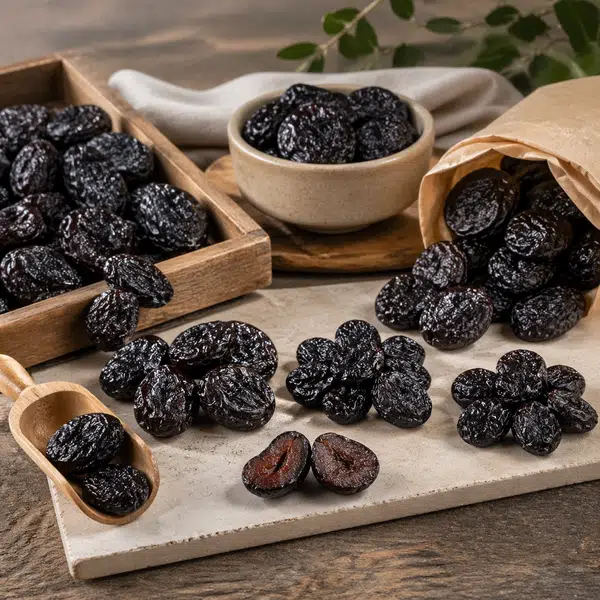
Prunes are dried plums processed to a shelf-stable moisture range while retaining a soft, dense and naturally sweet eating profile. In commercial trade, prunes may be offered pitted or unpitted, whole or processed, and in different count sizes depending on target use.

Typical commercial uses

Prunes are widely used in retail snack packs, bakery formulations, breakfast blends, confectionery applications, foodservice, institutional supply, functional foods, fruit preparations, paste production and ingredient systems where sweetness, binding behavior and fruit solids are important.

Functional value

Beyond taste, prunes are valued for soft texture, humectant behavior, formulation support, clean-label positioning potential and their usefulness in moisture-sensitive food applications where sugar balance and fruit body matter.

Commercial caution

Not all prune lots behave the same in handling or processing. Moisture, flesh firmness, skin condition, pitting efficiency and storage history can all affect packing line performance and finished product results.

How prune grades are usually evaluated

Grade discussions should go beyond a basic name and describe what the buyer actually needs the fruit to do.

Prune grades are generally assessed through a combination of physical appearance, fruit size, uniformity, flesh condition, skin integrity and permissible defects. In retail-oriented programs, the emphasis is usually on whole fruit presentation, even color, low defect incidence, good eating texture and consistent piece size within the pack. These programs may also require tighter pit control, stronger visual sorting and better surface cleanliness.

Industrial grades are often assessed more by functionality than by shelf appearance. A processor may accept a broader visual range if the fruit still meets targets for flavor, moisture, workable texture, pitting performance, microbial compliance and processing yield. This is especially relevant for dicing, chopping, paste, puree, bakery fillings, sauces or blended fruit systems.

Some buyers also segment prune grades by intended claim or positioning. Premium consumer channels may ask for larger fruit with better visual consistency and cleaner pack presentation. Mid-market retail may accept a commercial grade as long as the fruit remains sound, sweet and compliant. Ingredient manufacturers may prioritize value, supply continuity and process suitability over premium appearance.

Because terminology can differ by supplier and market, the safest practice is to define the grade in measurable commercial language. That usually means confirming count size, pitted or unpitted status, target moisture, defect tolerances, pack format, documentation and intended end use rather than relying only on a general grade label.

Prune sizes and count ranges

Size is one of the most important commercial variables because it influences appearance, pack yield and end-use fit.

Count-based sizing

Prunes are often discussed in count ranges per pound. Lower counts generally indicate larger fruit, while higher counts indicate smaller fruit. This system helps buyers compare appearance value and expected piece yield in packing or formulation.

Larger sizes

Larger count sizes are often preferred for premium retail packs, foodservice presentation and applications where individual fruit appearance matters. They can support a stronger visual proposition but usually come with a higher commercial value.

Medium sizes

Mid-range sizes are often used where a balance of cost, pack presentation and functional consistency is needed. These are common in mainstream retail, bulk repacking and mixed application programs.

Smaller sizes

Smaller fruit can be efficient for processing, dicing, chopping, ingredient use and value-oriented channels. They may offer better cost positioning when large visual fruit is not essential to the finished product.

Uniformity matters

Even when a count range is accepted, internal size consistency remains important. Wide variation inside the same lot can affect retail pack appearance, machine feeding, cutting behavior and perceived quality on arrival.

Sampling note

Count size should always be reviewed together with moisture and fruit condition. A nominal size alone does not fully describe the commercial value of a prune lot.

Core quality parameters buyers usually specify

These are the technical and commercial points most often reviewed before approval.

Moisture

Moisture influences softness, stickiness, shelf behavior, process handling and pack stability. Fruit that is too dry may feel leathery and lose eating quality, while fruit that is too moist can become overly sticky, difficult to handle or less suitable for some automated lines.

Texture

Texture should match the end use. Retail buyers often prefer a soft but intact bite, while processors may want a fruit body that cuts, dices or purees consistently without excessive smearing.

Color and visual appearance

Commercially acceptable prune color is usually deep and natural, but buyers still review uniformity, surface condition, gloss level and the extent of visible bloom, scuffing or processing marks depending on the category.

Flavor profile

Flavor should be naturally sweet, rounded and free from fermentation notes, smoke taint or other off-odors. End users often compare sweetness intensity and overall fruit character when qualifying supply.

Pit control

For pitted programs, buyers normally define whether occasional pit fragments are tolerated and at what level. Pit control is a critical safety and quality issue, especially in retail and ingredient applications.

Fruit integrity

Depending on the application, buyers may specify whole fruit percentage, split fruit tolerance, broken fruit tolerance or minimum usable fruit proportion after sorting.

Defect tolerance

Commercial specifications may include limits for skin damage, severe shriveling, embedded foreign matter, fermentation damage, discoloration, insect-related defects or abnormal texture. Exact limits vary by market and use case.

Microbiological status

Importers and industrial users may require agreed microbiological parameters, especially when prunes will be used without further kill step or are destined for sensitive food categories.

Retail grade versus industrial grade

These categories are often confused, yet they serve very different commercial needs.

Retail-focused prune programs

Retail programs usually require stronger presentation standards, more consistent count size, cleaner fruit appearance, tighter control on visual defects, dependable pit removal where relevant and packaging that supports shelf presentation and consumer confidence. Label compliance, barcode setup, carton marking and pallet appearance are also more important in these programs.

Industrial-focused prune programs

Industrial programs are more likely to focus on value-in-use. Buyers may prioritize cost efficiency, continuous availability, process yield, moisture balance, cuttability, flavor consistency, microbiological compliance and ingredient functionality. A lot that is perfectly acceptable for industrial use may not be the right choice for premium consumer shelves.

Private label implications

Private label customers typically fall closer to retail expectations, but with greater emphasis on pack specification, artwork coordination, destination language requirements, shelf-life statement, compliance file readiness and repeatable lot-to-lot presentation.

Sampling discipline

Because prune performance can vary by lot, sample approval is especially important when moving from spot buying to a programmed supply relationship. It helps confirm both visual and functional suitability before a production commitment is made.

Common commercial forms and packing options

The right packing format depends on channel, handling conditions and how the fruit will be used after arrival.

Bulk export packs

Bulk prunes are commonly supplied in lined cartons or food-grade bags inside outer cartons suitable for palletized export. Bulk formats are practical for repackers, distributors and ingredient users handling larger volumes.

Foodservice and repack formats

Intermediate pack sizes may suit wholesalers, catering channels and local repackers who need manageable handling without moving directly into final consumer packaging at origin.

Retail-ready and private label

Consumer packs can include branded or private label formats tailored to shelf requirements, artwork, legal text and destination language rules. These programs generally require earlier planning and more coordination on materials.

Pitted and unpitted options

Some buyers prefer unpitted fruit for traditional channels, while others require pitted fruit for convenience, ingredient preparation or retail usability. The choice affects cost structure, quality checks and potential pit tolerance expectations.

Processing formats

For industrial channels, prunes may also be discussed in relation to chopped, diced, paste or puree supply programs, depending on the capabilities of the processing chain and final application requirements.

Labeling and traceability

Outer case marking, lot code structure, pallet identification and traceability documents should be clarified at quotation stage to avoid shipment-side delays later.

Application fit by segment

Matching fruit grade to application is one of the easiest ways to improve buying efficiency.

Retail snack packs

Usually favor more attractive whole fruit, good size consistency, controlled stickiness, pleasant bite and dependable visual presentation. Consumer acceptance depends strongly on what the fruit looks like when the pack is opened.

Bakery and confectionery

Require fruit with consistent sweetness, workable moisture and reliable processing behavior. Depending on the formula, buyers may accept mid-range sizes if the fruit performs well in fillings, dough systems or enrobed products.

Cereal, breakfast and blends

May prioritize cuttability, moisture balance and controlled surface tack so the fruit integrates well with other ingredients and supports efficient line handling.

Ingredient conversion

For puree, paste, concentrate-style fruit systems or diced ingredients, visual perfection is usually less important than flavor, solids consistency, safety profile and processing yield.

Foodservice

Often needs a balance between appearance and commercial practicality. Pack size, ease of handling and stable supply can be as important as premium visual grade.

Wellness and functional positioning

These channels often pay close attention to fruit identity, simple ingredient positioning, certification claims and consistent eating quality, especially where the product is marketed for daily use.

Typical defects and why they matter

Understanding defect language helps prevent misunderstanding during QC review and claims handling.

Defect evaluation in prunes usually covers both food safety relevance and commercial usability. Examples may include excessive skin breakage, severe misshaping, abnormal dryness, fermentation-related notes, excessive stickiness, discoloration, embedded foreign material, undeclared pit presence in pitted lines, pit fragments, insect-related damage or fruit pieces outside the agreed size expectation.

Not every defect has the same commercial weight. A slight cosmetic issue may be acceptable in a processing program but unacceptable in a premium retail pack. Conversely, pit fragments or unsafe foreign matter are critical concerns across all channels. This is why commercial specifications should distinguish clearly between appearance tolerances, functional tolerances and safety-critical non-conformities.

For exporters and importers, alignment before shipment is essential. Clear defect language in the product specification, supported by approved reference samples when relevant, reduces the risk of disputes after arrival and makes container acceptance decisions more objective.

Quality assurance and documentation points

Documentation expectations should be discussed at the same time as the physical specification.

Product specification sheet

A clear specification should cover product identity, size range, pitted status, target moisture, sensory profile, defect allowances, microbiological criteria, packaging and labeling requirements.

Lot traceability

Traceability should connect the shipped product to its production lot, packing date and export documentation so any later quality review can be handled quickly and accurately.

Certificates and declarations

Depending on destination and program type, buyers may request routine commercial documentation as well as product declarations, certification records or compliance statements relevant to the market.

Sampling and retention

Pre-shipment sampling, sealed reference samples and retention procedures are useful for higher-value or higher-risk programs, particularly where the fruit is intended for branded retail or technically sensitive processing.

Micro and residue alignment

Where applicable, microbiological and residue expectations should be aligned before production rather than discussed only after the cargo is ready. This is especially important in regulated or premium channels.

Storage and shelf-life guidance

Recommended storage conditions, expected shelf-life under specified conditions and transport expectations should be stated clearly to support importer handling after arrival.

Commercial factors that influence pricing

Price should always be assessed against the full specification, not in isolation.

Prune pricing typically moves with crop conditions, size availability, pitted versus unpitted status, grade tightness, packaging complexity, certification profile, order volume, shipment timing and destination requirements. Larger, more attractive fruit usually carries a stronger value, especially when it is sorted for retail-oriented presentation. More technical requirements, such as tight pit control, private label packing, specialized documentation or more demanding compliance expectations, can also influence the final offer.

Annual or seasonal programs often achieve better continuity than purely opportunistic spot buying. When buyers provide realistic volume estimates, preferred shipment schedule and confirmed pack format early, suppliers can plan more efficiently and structure more stable commercial terms. By contrast, late changes to size, packaging or label requirements can affect lead time, material allocation and cost.

For comparison purposes, buyers should always check whether offers are being made on the same basis: same count range, same pitted status, same pack weight, same quality tolerance, same certification scope and same delivery term. A lower offer may simply reflect a different commercial specification.

Buyer checklist before requesting a quotation

Providing these details early makes quotations faster and more accurate.

End use

State whether the prunes are for retail, repacking, foodservice, bakery, snacks, ingredient processing, puree or another defined application.

Size expectation

Indicate the preferred count size or whether you need large, medium or processing-grade fruit if a formal count range is not yet fixed.

Pitted status

Clarify whether the requirement is for pitted or unpitted fruit and whether pit fragment tolerance needs to be defined in the specification.

Moisture and texture preference

Explain whether the priority is soft eating quality, free-flowing handling, cutting performance or stable process behavior.

Packaging format

Confirm bulk carton, intermediate pack or retail/private label format, including any pallet or label requirements already known.

Program scope

Share expected order volume, trial quantity, target destination, shipment frequency and whether the requirement is spot-based or contract-based.

Key takeaways

These points help importers, processors and brand owners qualify prune offers more effectively.

Specification first

Prunes should be quoted against a defined size, moisture, pit status, defect tolerance and pack format, not against a generic name alone.

Size drives value

Count size affects not only appearance but also pack yield, usage suitability and price positioning.

Application decides grade

The right grade for premium retail may differ substantially from the right grade for puree, diced fruit or bakery use.

Moisture matters operationally

Moisture and texture influence shelf behavior, handling, cuttability, perceived freshness and production performance.

Documentation reduces risk

Clear specifications, traceability and aligned quality documents reduce misunderstanding and support smoother shipment acceptance.

Programs outperform guesswork

Structured annual or seasonal planning usually delivers better continuity and more reliable commercial execution than last-minute spot buying.

Mini FAQ

Quick answers to the most common commercial questions around prune sourcing.

What should buyers clarify first for prunes?

Buyers should first confirm end use, count size, moisture preference, acceptable defect tolerance, required certification profile and target pack format.

How are prune sizes commonly quoted in trade?

Prune sizes are commonly discussed by count ranges that indicate the approximate number of fruits per pound, with lower counts generally meaning larger fruit.

Which quality parameters matter most in a commercial offer?

The most important quality parameters are size, moisture, texture, color, flavor, pit condition, defect tolerance, microbiological status, packaging format and documentation requirements.

Are the same prunes suitable for retail and industrial use?

Not always. Retail programs usually require tighter appearance and sorting standards, while industrial programs may focus more on functionality, process behavior and value.

Why is moisture so important in prune buying?

Moisture affects eating quality, shelf behavior, stickiness, handling performance, cutting behavior and overall suitability for retail or industrial use.

Can prune offers support both conventional and organic programs?

In many supply chains they can, provided the product specification, documentation and certification profile are aligned with the target market and available sourcing program.

Discuss your requirement with Atlas

Share your size target, application and pack format to receive a more relevant commercial proposal.

Atlas Global Trading Co. supports buyers looking for practical, commercially aligned dried fruit programs rather than generic offers. For prune inquiries, the fastest route to a workable quotation is to share target size, pitted or unpitted preference, intended use, packaging expectation, annual volume and destination market. This makes it easier to match the right supply base, define the correct quality profile and structure the most suitable offer for your channel.

Quick Contact