Retail packaging priorities
Retail programs usually emphasize consumer presentation, portion-friendly unit sizes, front-of-pack appeal, label clarity, shelf performance and repeat visual consistency.
A practical commercial guide to packaging options for Malatya sun-dried apricots across foodservice, retail and private label channels, covering pack logic, channel fit, shelf presentation and supply planning.
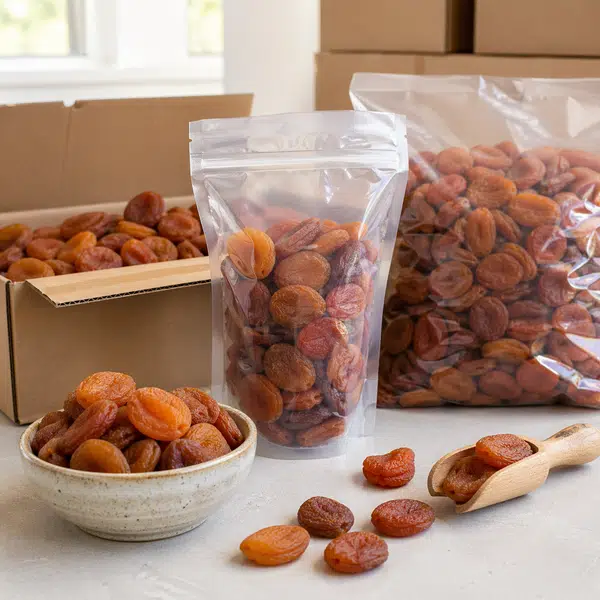
For sun-dried apricots, the packaging format is part of the product offer itself. It influences presentation, handling, positioning and total commercial suitability.
Malatya-origin sun-dried apricots are sold into several channels at once, including retail, foodservice, private label, industrial ingredient and bulk distribution markets. Because the same fruit can move through different commercial routes, the correct packaging is not only a matter of convenience. It affects how the product is displayed, how it is handled in warehouses and kitchens, how it is priced, how it is replenished and how well it fits the final business model.
Retail buyers usually focus on consumer-facing presentation, shelf efficiency, label communication and repeat pack consistency. Foodservice buyers typically focus more on pack practicality, back-of-house handling, ease of use, carton efficiency and sensible unit sizing. Private label buyers must consider all of these points while also maintaining brand presentation, label compliance and repeat execution over time.
That is why packaging should not be treated as a late-stage decision after the fruit has already been selected. The right grade, size profile and visible quality expectations often depend on the intended pack format and destination channel. A fruit profile suitable for a bulk foodservice format may not be the best choice for a premium consumer pouch. Likewise, a premium retail pack structure may create unnecessary cost in a professional kitchen or institutional supply setting.
Atlas treats packaging as a separate knowledge topic because foodservice and retail programs usually succeed when packaging, product profile and commercial logic are aligned from the beginning rather than assembled piece by piece after the quotation stage.
Although both channels may use the same origin and fruit category, they usually require different packaging logic.
Retail programs usually emphasize consumer presentation, portion-friendly unit sizes, front-of-pack appeal, label clarity, shelf performance and repeat visual consistency.
Foodservice programs generally emphasize practicality, efficient storage, easy handling, sensible unit size, reduced pack complexity and operational ease for kitchens or professional users.
Retail packs must balance product value perception, branded presentation, shelf readiness and target consumer price points.
Foodservice buyers usually focus more on usable packed volume, handling efficiency and whether the format works in real operational conditions.
The correct pack format depends on how the buyer intends to sell, distribute or use the product after import or receipt.
These are designed for direct shelf sale and usually require stronger presentation consistency and clearer label structure.
These typically follow the retailer or brand owner's specifications for pack size, design, label details and repeat execution.
These are generally structured for professional use rather than consumer shelf presentation and prioritize practicality over marketing impact.
These support repacking, redistribution or multi-channel handling where the buyer manages the downstream packaging later.
Some buyers use one supply program to support both foodservice and retail, but this usually requires clear separation of pack logic by channel.
These may be used in early commercial stages before the final program structure is fixed, especially in new market entry or private label launch planning.
Retail packaging decisions are closely tied to consumer perception, shelf discipline and repeat presentation quality.
The product must look commercially attractive in the final consumer unit, especially where the apricot is visible through the packaging.
Unit size should suit the target market, expected household use and shelf positioning rather than follow a generic format without channel logic.
Retail programs usually require tighter attention to label content, product claims, brand presentation and market-specific wording.
Retail buyers generally need stable pack execution across recurring deliveries so the brand presentation remains coherent over time.
Foodservice packaging is usually judged by how effectively it works in professional use, storage and replenishment environments.
The pack should be easy to open, store, handle and use in kitchens, catering or professional preparation environments.
Foodservice buyers usually care less about shelf aesthetics and more about whether the pack size matches their usage cycle sensibly.
Outer carton logic, stackability and movement practicality can matter materially in recurring professional supply programs.
Foodservice customers often value repeat pack practicality and dependable replenishment more than premium visual packaging effects.
The packaging format and the fruit profile should support each other. Strong alignment usually produces a better commercial result than treating them as separate decisions.
A premium consumer-facing retail pack often needs a more presentation-controlled product profile with stronger visible consistency. A foodservice or redistribution program may accept a more practical grade if the fruit remains commercially fit for the use case. This does not mean one is better in absolute terms. It means each packaging route implies its own product logic.
For this reason, buyers should avoid selecting the fruit first and the pack later without considering channel fit. The commercial offer becomes stronger when the supplier understands whether the apricots are heading to direct consumer sale, catering, hospitality, professional kitchens, repacking or a mixed-channel system. Once that is known, the grade, size logic and packaging discussion can be aligned more effectively.
Private label programs normally require more detail because the fruit, packaging and brand presentation must all work together across repeated shipments.
In private label business, packaging is often one of the main commercial variables. Pack size, artwork approval, label language, barcode structure, outer carton details and destination-specific presentation all need to be aligned before recurring shipments begin. Because of this, private label programs usually benefit from earlier specification discipline than simple bulk supply programs.
Where the buyer intends to run both private label retail and broader bulk or foodservice routes, the strongest approach is generally to separate the pack structures clearly instead of trying to fit every channel into one packaging model. This helps avoid confusion in forecasting, label planning and repeat production.
Packaging decisions do not end with the primary pack. Secondary and transport structure also shape the efficiency of the program.
Carton structure should suit storage, movement and shipment handling at both origin and destination.
Stable pallet logic helps with warehouse flow, loading efficiency and better repeat execution across recurring shipments.
The packaging plan should support the actual replenishment cycle, whether that is monthly, campaign-based or seasonal.
These transport and warehouse details can materially affect the total practicality of a retail or foodservice program. Buyers who discuss them early usually achieve smoother ongoing supply than buyers who focus only on the primary pack and address the rest later.
Most problems arise when packaging is treated as a simple finishing step instead of as part of the core commercial design.
Retail, foodservice and private label each require different packaging priorities, so vague channel language weakens the offer.
A product profile suitable for bulk or professional use may not support the same result in a premium consumer-facing pack.
Retail and private label programs often lose time and efficiency when label structure is not defined early enough.
Ignoring carton, pallet and transit structure can create avoidable warehouse and logistics inefficiency later.
Mixed-channel programs usually perform better when each route has its own packaging logic instead of one forced compromise.
The true commercial result depends on channel fit, handling practicality and repeat execution, not only on the headline pack price.
The most useful packaging inquiry links product, channel and operational model in one clear commercial brief.
State clearly whether the requirement is for retail, foodservice, private label, redistribution or a combination of these.
Confirm the preferred unit size, pack style, outer carton logic and whether the pack is consumer-facing or operational in nature.
Share the expected annual volume, shipment rhythm, certification scope and whether the inquiry is for trial packs or a recurring commercial program.
These are the main points buyers usually need before structuring foodservice or retail packaging for sun-dried apricots.
The correct pack format influences channel fit, presentation, logistics and the final usefulness of the quotation.
Retail focuses more on consumer presentation and label communication, while foodservice focuses more on practicality and operational handling.
A premium retail pack normally needs a stronger presentation profile than a professional-use or redistribution format.
When the supplier understands the route to market, label scope, pack size and annual demand structure, the commercial offer becomes much more precise.
Short answers for importers, distributors, foodservice buyers and private label teams reviewing packaging strategy.
Buyers should clarify end use, target market, desired grade, sulfur-free or other quality profile, required certification scope and preferred pack format before requesting a quotation.
Because packaging is not only a packing decision. It affects channel fit, presentation, shelf handling, unit economics, warehouse flow, repeatability and the final commercial offer.
The main priorities are target sales channel, pack size, grade suitability, presentation quality, labeling scope, transport efficiency and whether the packaging format supports the buyer's retail, foodservice or private label model.
In many cases yes, provided the product profile, certification requirement, packaging structure and labeling expectations are aligned with the customer requirement and the available sourcing program.