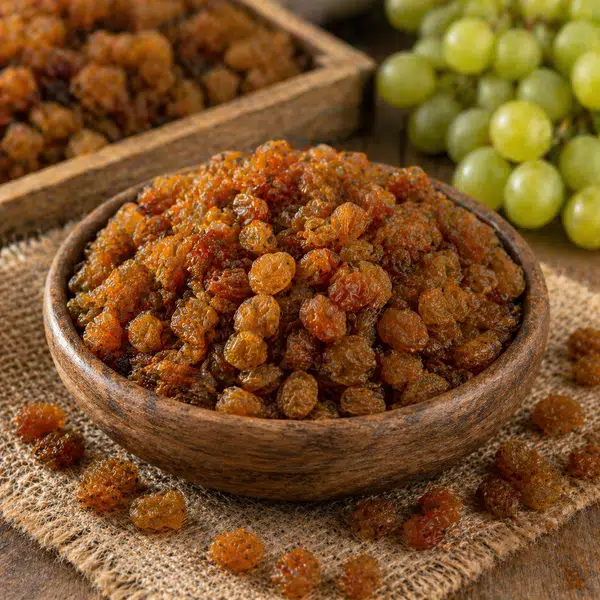
Natural product page

Sultana Raisins

A core Turkish volume product for bakery, cereal, snack, confectionery, foodservice, industrial ingredient and private label channels.

Origin: Turkey
Product type: Seedless naturally dried sultana raisins
Supply mode: Bulk export, industrial and private label
Commercial use: Ingredient, repacking, foodservice and retail-ready programs
Seedless Bulk export Ingredient Private label Turkish origin
Turkish sultana raisins for bulk export

Commercial overview

Sultana raisins are one of the most commercially important dried fruit categories in Turkish export trade. They are a core volume line because they fit a wide range of end uses, move efficiently in bulk, work well in industrial recipes and can also be adapted to consumer-facing retail programs. For many importers, they are not a niche add-on but a staple line that supports year-round demand across multiple channels.

Their commercial strength comes from everyday functionality. Sultanas are widely used in bakery, breakfast cereal, snack mixes, confectionery, fillings, foodservice preparation and repacking programs. This makes them relevant not only for dried fruit specialists, but also for ingredient traders, industrial food manufacturers, wholesalers and private label buyers looking for a stable, recognizable and versatile product.

This page is structured to help importers, distributors, repackers, private label buyers and industrial users review the line before moving into a detailed quotation process covering grade, cleaning standard, packing format, shipment size, destination compliance and intended application.

Specification snapshot

Seedless grapes, naturally dried, moisture max. 18%, aflatoxin B1 < 5 ppb, total aflatoxin < 10 ppb, Salmonella absent, non-GMO.

Depending on program structure, discussions may also include size count, stem tolerance, sugar crystallization, damaged fruit tolerance, oiling preference where applicable, microbiological alignment, foreign matter control, residue expectations, metal detection and packing presentation.

Final values may be aligned to crop conditions, processing route, customer application, agreed inspection criteria and destination market requirements.

Range position

Natural / Conventional Range

A core Turkish volume product with broad relevance across industrial, foodservice, wholesale, repacking and private label channels.

Key applications

  • Bakery
  • Breakfast cereal
  • Snacking
  • Confectionery
  • Foodservice
  • Repacking

Packing direction

  • Bulk export cartons
  • Industrial ingredient packs
  • Private label formats
  • Retail-ready programs
  • Foodservice supply
  • Mixed portfolio shipments

Why sultanas remain a core buying category

For professional buyers, sultanas are commercially attractive because they are functional, scalable and familiar to the market. They can be sold as a straightforward dried fruit line, but they also play a wider role as a practical ingredient in products where sweetness, chew, visual inclusion and cost control need to be balanced.

  • Suitable for both ingredient and direct-consumption channels
  • Strong compatibility with bakery and cereal formulations
  • Efficient bulk shipment economics for volume importers
  • Established market acceptance across multiple regions
  • Flexible conversion into private label or repacking formats
  • Easy portfolio integration alongside apricots, figs, mulberries and cherries

Typical buyer profiles

  • Importers: looking for a core Turkish dried fruit line with stable demand and scalable shipment planning
  • Distributors: serving wholesale, foodservice and retail customers with a fast-moving standard product
  • Industrial users: requiring consistent ingredient supply for recipe-controlled production
  • Repackers: seeking cleaned and packed incoming product suitable for efficient secondary packing
  • Private label buyers: needing label-ready pack formats and controlled commercial presentation
  • Bakery and cereal manufacturers: prioritizing process suitability, appearance tolerance and supply continuity

Technical product profile

Product character

Sultana raisins are naturally dried seedless grapes known for their soft to semi-soft texture, sweet taste and broad usability in both ingredient and retail settings. They are commercially preferred when buyers need a versatile raisin profile that can perform across multiple product categories.

Processing direction

Processing discussions typically include cleaning, screening, washing where applicable, stem removal, cap-stem control, sorting, metal detection, inspection and packing. Final route depends on whether the product is intended for industrial use, repacking or direct retail sale.

Application fit

Suitable for dough systems, cereal inclusions, snack mixes, chocolate-coated products, confectionery use, fillings, cooking applications and retail pouch or carton programs.

Commercially relevant quality parameters

In professional trade, the buying decision depends on more than basic product identity. The actual specification must reflect the intended end use, cleaning standard, packing route and destination compliance expectations. The most important points are the ones that influence process performance, visual acceptance, claim risk and finished cost.

  • Moisture level and texture consistency
  • Size count or grade logic where required
  • Color range and overall visual uniformity
  • Stem and cap-stem tolerance
  • Foreign material control
  • Damaged, fermented or excessively crystallized fruit tolerance
  • Microbiological expectations aligned to end use
  • Residue and contaminant requirements according to market
  • Aflatoxin compliance where relevant to the program
  • Flowability and handling suitability for industrial users where applicable

Typical specification discussion points

  • Standard bulk grade or application-specific grade
  • Bakery, cereal, snack, confectionery or repacking end use
  • Target moisture and handling profile
  • Cleaning and inspection standard
  • Requested microbiological limits
  • Residue and market compliance expectations
  • Bulk carton, foodservice or retail pack format
  • Labeling scope and private label requirements
  • Shipment size, loading model and destination country
  • Document set required for customs, QA and customer approval

Indicative technical specification framework

The points below provide a practical framework for commercial discussion. Final specifications should always be confirmed in the approved product sheet, quotation and contract documents.

Product name: Turkish sultana raisins

Botanical raw material: Seedless grapes

Origin: Turkey

Drying method: Natural drying

Moisture: Max. 18% unless otherwise agreed for the program

Aflatoxin B1: < 5 ppb

Total aflatoxin: < 10 ppb

Microbiology: Salmonella absent; other limits according to customer and market requirements

GMO status: Non-GMO

Appearance: Characteristic for sultana raisins and agreed grade

Taste and odor: Characteristic, free from abnormal fermentation notes

Foreign matter: Controlled according to agreed inspection standard

Shelf life: To be confirmed per pack format, storage conditions and production timing

Storage: Cool, dry and hygienic conditions away from moisture, heat and odor sources

Exact figures for defect tolerance, piece count, microbiology, residues and packaging construction should be confirmed against the final agreed specification.

Industrial direction

Suitable for buyers focused on ingredient performance, process continuity, manageable moisture and stable bulk supply for production schedules.

Retail and repacking

Works for pouch, carton and secondary repacking programs where visual cleanliness, labeling and shelf presentation matter.

Foodservice and wholesale

Relevant for distributors serving bakeries, kitchens, caterers and wholesale food channels that need practical pack sizes and dependable stock flow.

Application-specific buying logic

The right sultana program depends on how the product will be used. An industrial bakery buyer may prioritize process tolerance, moisture behavior and defect control, while a retail buyer will focus more on appearance, pack design and shelf positioning.

  • Bakery: consistency, dough performance, moisture balance and fruit integrity
  • Cereal: size control, appearance and pack inclusion suitability
  • Snack mixes: visual balance, sweetness and handling stability
  • Confectionery: manageable fruit condition for coating, mixing or filling systems
  • Repacking: clean incoming product and efficient secondary packaging flow
  • Retail: shelf-ready presentation, labeling and private label consistency

Packing and private label options

Packing discussions usually begin with the buyer's channel and handling requirements. Bulk formats are common for industrial and distribution supply, while smaller presentation formats are more relevant for private label and direct-to-shelf programs.

  • Bulk cartons for importers and industrial users
  • Ingredient-oriented packs for manufacturing environments
  • Foodservice formats for wholesalers and catering supply
  • Retail pouch or carton programs
  • Private label presentation with customer-defined labeling scope
  • Pallet and carton planning according to warehouse and freight logic

Final pack style, carton strength, inner packaging, palletization, net weight and labeling details should be confirmed during quotation and approval.

Shipment and supply planning

Sultanas are frequently handled as a volume product, so logistics planning has real commercial importance. Buyers typically evaluate loading efficiency, shipment timing, inventory turnover and whether the program will run as a standalone line or as part of a broader dried fruit purchase schedule.

  • Suitable for regular container-based procurement programs
  • Efficient for recurring import schedules and forecast-based buying
  • Can support mixed dried fruit sourcing strategies where relevant
  • Requires alignment on destination labeling and document needs before dispatch
  • Benefits from early agreement on pack dimensions and pallet configuration

Quality assurance and compliance discussion

Professional buyers usually require more than a price offer. They need confidence that the product can move through customs, pass incoming QA review and perform in the intended channel. For this reason, technical review and commercial review typically run in parallel.

  • Lot-based traceability and product identification
  • Specification alignment before shipment
  • Document readiness for import and customer approval processes
  • Microbiological and contaminant review where required
  • Private label artwork and legal copy control where applicable
  • Clear inspection criteria to reduce dispute risk after arrival

Commercial risks to clarify early

  • Using a general bulk grade for an application that needs tighter appearance control
  • Not defining stem tolerance, defect tolerance or size expectations clearly enough
  • Assuming one cleaning standard fits bakery, cereal and retail equally well
  • Leaving residue or document requirements until after pricing is agreed
  • Requesting private label supply without locking the packaging brief early
  • Underestimating the importance of intended end use in setting the right commercial specification

What buyers usually want from a supplier discussion

Most serious inquiries move quickly when the buyer clearly states application, market and pack direction. The commercial conversation then becomes practical and efficient, focused on matching the right grade and process route to the actual business need.

  • Clear product and grade recommendation
  • Packing options suitable for the sales channel
  • Technical alignment on moisture, microbiology and contaminants
  • Shipment planning and loading logic
  • Document and label requirements confirmed in advance
  • Commercial structure that supports repeat buying rather than one-off uncertainty

How Atlas usually discusses this product

Commercial discussions usually begin with the intended end use, because that determines the most suitable grade, cleaning route and pack format. A cereal or bakery customer may focus on process behavior and consistent ingredient handling, while a private label buyer will add pack presentation, barcode, label copy and shelf positioning to the discussion. Repackers often prioritize clean incoming product, efficient secondary handling and dependable lot-to-lot performance.

The next stage usually covers target market, microbiological and residue expectations, packing format, shipment size, document scope and whether the supply is intended for bulk import, industrial processing, foodservice distribution or private label retail. This keeps the quotation commercially relevant rather than generic.

Seedless Bulk export Ingredient Private label Bakery & cereal

What to include in your inquiry

  • Target application such as bakery, cereal, snack, confectionery or repacking
  • Destination country and target market segment
  • Estimated shipment size or annual volume
  • Required pack format and carton structure
  • Any microbiological, residue or contaminant expectations
  • Private label or plain pack requirement
  • Requested document set
  • Preferred shipment window
  • Any grade, size or appearance expectations already defined by your customer

Best fit for this product

Sultana raisins are best suited for buyers that need a commercially proven, technically practical and scalable dried fruit line. They are especially valuable where one product must serve multiple channels, from industrial use to retail conversion, without losing commercial clarity.

For many professional buyers, this is not simply a raisin product. It is a foundational portfolio line that supports repeat purchasing, broad customer coverage and efficient integration into the wider dried fruit business.

Quick Contact